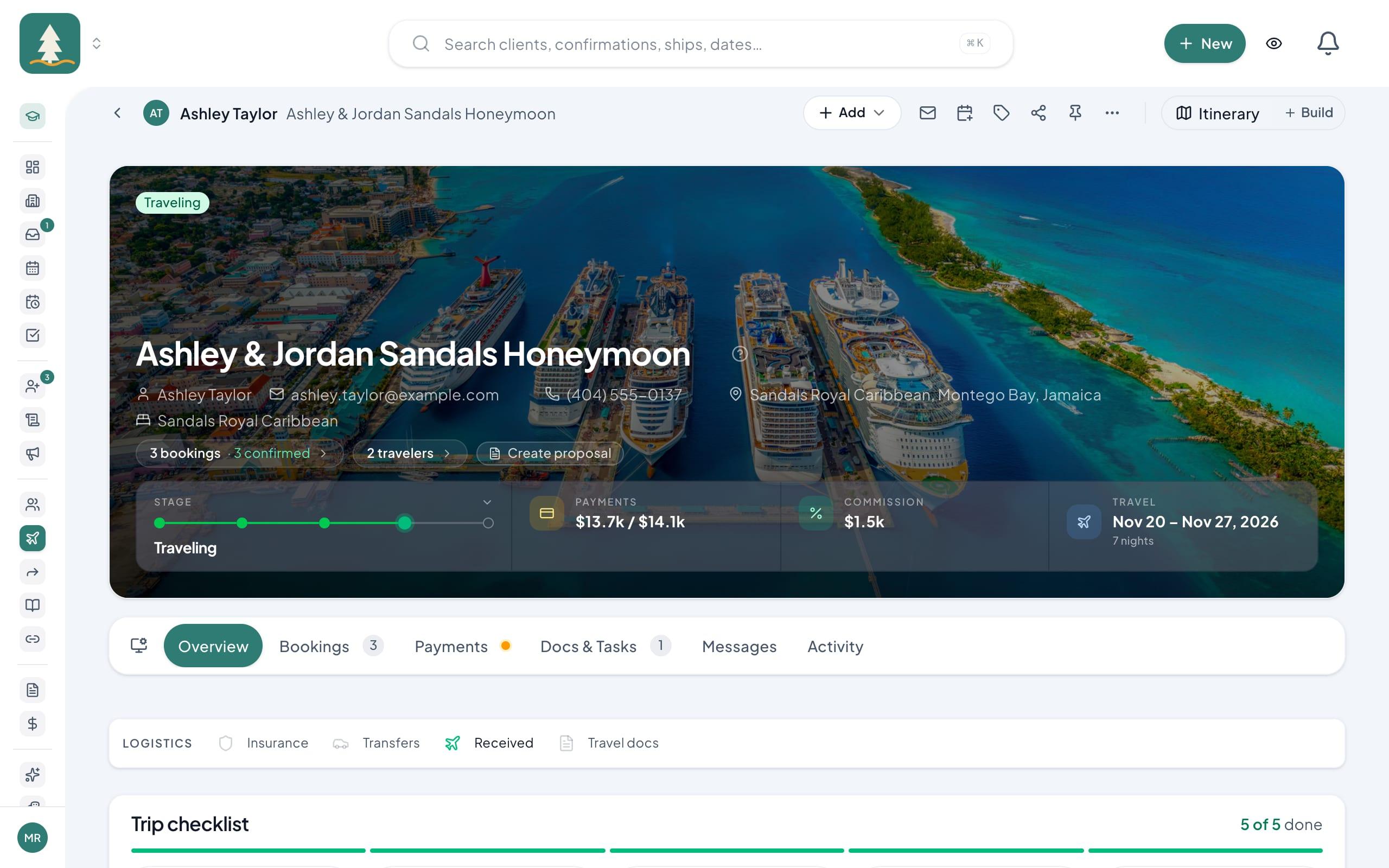
A trip rarely has one price. There is a deposit, a final payment date set by the supplier, an add-on booked later, and a family who wants to split it. Keeping that straight across emails and a spreadsheet is where final payments get missed.
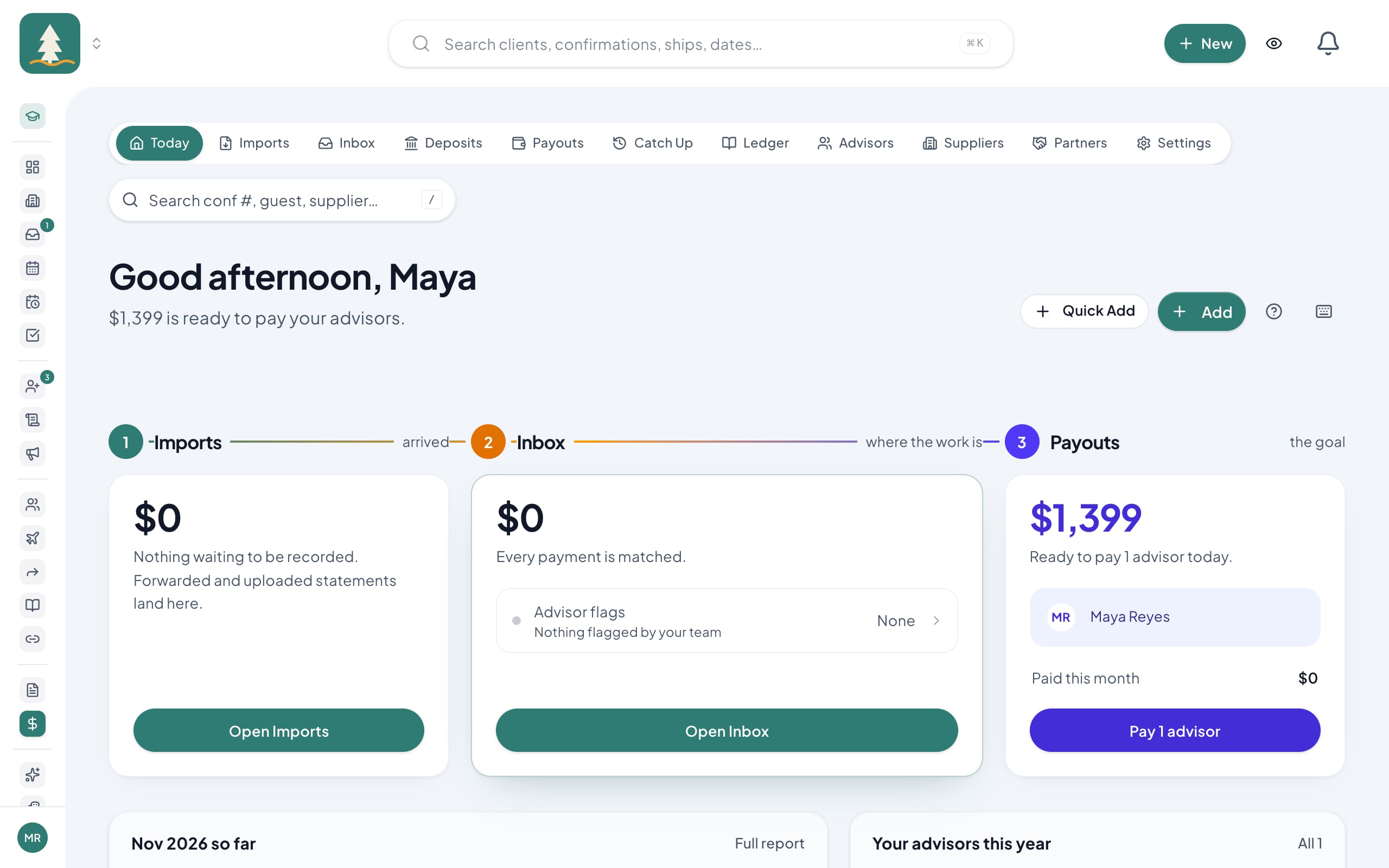
Here is how JourneyFuse keeps one plan per trip.
One payment plan per trip
When you add a booking with a confirmation number and a price, it goes on the trip's open invoice, the same one the client pays from in their client portal. If there isn't one, JourneyFuse drafts it. Later bookings join the same invoice instead of starting new ones.
You choose what happens by default in Settings → Agency & Branding → Defaults: draft an invoice for you to send, make it payable on the client's trip straight away, or do nothing.
Deposits that add themselves up
If the trip has a deposit, that's the deposit. If not, the fixed deposits on its bookings are added together, which is how cruise deposits usually work.
Choosing the schedule
Payment schedule offers three shapes:
- Pay in full
- Installments: a payment on the same day every month, plus a Final payment date
- Custom: any dates and amounts you set
Payments already made or held on a card are locked, so editing the schedule never rewrites what's already happened.
Sending it
Open for payment puts a Make a Payment button on the client's trip without sending an email. Send Invoice does the same and emails it.
For a family or a group of friends, Traveler Shares splits it evenly or lets you choose who pays what. Per-person proposals with two or more travelers split on their own.
Reminders that don't pile up
Payment reminders live in Automations → Payment reminders. By default they go out 3 days before, on the due date, and 3 and 7 days after. Each one can send itself or wait for you with Ask me first. Clients never get more than one payment email a day.
Supplier timing sets different days per supplier, for example 90, 60 and 30 days before for Disney Cruise Line. An optional late fee can be a flat amount or a percentage.
Draft invoices never send reminders.
Card authorizations for each payment
One card for every date links every installment to one card authorization. Or have JourneyFuse email a fresh authorization request 3 to 14 days before each payment. The supplier runs the actual charge; cards are encrypted and deleted 7 days after the trip ends.
Catching what slips
The Balance watchdog is a monthly email to you, never the client, listing balances that are overdue or trips that have departed with money still owing. Turn it on in Settings → Notifications → Balance safeguards.